
Creativity in "traditional" RPGs

The gaming community throws around the term “traditional RPG” quite often. Sometimes we are specific and talk about a “traditional line battles” or “traditional leveling system,” but usually we group a large number of games into a single sub-genre as “traditional.” And while I tend to like these games, I’m not here to persuade you that you should go out and play Final Fantasy III, because I have the magic key to liking it (I don’t, and I’ve never played FFIII). Instead, I want to think through a bit of the history of RPGs, what fans asked for instead of “traditional” systems, and what we got. I think that we actually got some really creative, varied game systems and stories that we should note as, if not something that we actually wanted to play, really amazing and rather influential to the history of RPGs.
So what are “traditional” RPGs
The types of games that we think of as RPGs (especially JRPGs) came about in 1986 with Dragon Quest. Prior to DQ, most RPGs followed the success of Western games like Wizardry and Ultima. In Japan, games like Dragon Slayer and Hydlide (both 1984) furthered certain aspects of these Western games, but in general they were very difficult to play. Stories were given in the instruction booklets (if there were any stories), and the main goal and progression of the games were rather opaque. In this day, players were expected to experiment with different paths and only found things through trial and error. PCs died easily, which doesn’t sound like much fun these days, but consider this era of games to be like Tabletop RPGs like Call of Chthulu, where some of the fun is that your PC lives in a very dangerous world and is highly expendable. Some of the fun, too, was simply being able to play a video game. That alone was something remarkable.
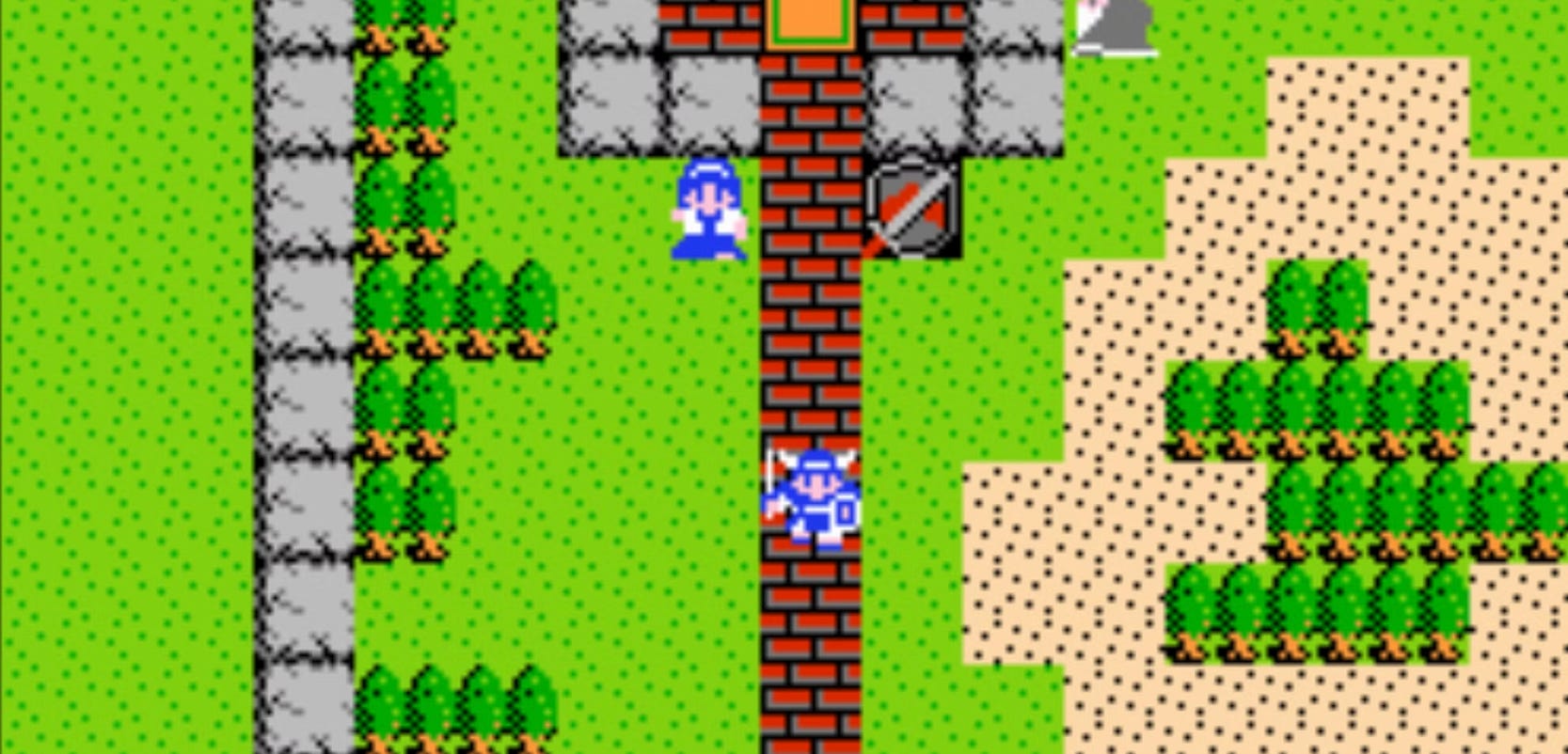
Enix came along, however, and saw potential. They wanted to make a RPG (or “simulation game”) that was more accessible to a wider audience, had interesting graphics, and wasn’t so difficult to finish. Dragon Quest was a big hit with audiences in Japan, because it did all these things: Toriyama Akira did the monster design, the music was mysterious and interesting, and it was a lot easier for the PC to die. Following the success of Dragon Quest, many DQ-clones were published to a Japanese audience with a deepening hunger for RPGs.
This hunger did not get passed on to the rest of the world. Dragon Quest (branded as Dragon Warrior in the US) was released three years later in 1989 when, in terms of graphics and systems, the gaming community had moved on. Final Fantasy was a moderate success, but it wasn’t until the SNES that RPGs began to take off, with Final Fantasy VI and Chrono Trigger as the pinnacle of the genre. The success of these games, and the ever developing powers of game creators to make games with better sound, graphics, and story, made gamers interested in what would come next, not how what they already had could change and grow.
Dreaming of what could be
It wasn’t until the success of Final Fantasy VII (1997) that gamers began to dream outside of the boundaries of the RPG genre. FFVII was widely popular in the West, and the game set a new standard for what RPGs could be. In the years following ‘97, we saw a wide variety of games that both shared various qualities with FFVII but also were (either subtly or not-so-subtly) different. Gamers in the US began to get tired of what they considered the same-old-same-old, and even in the early 00s were calling out for “something different.”
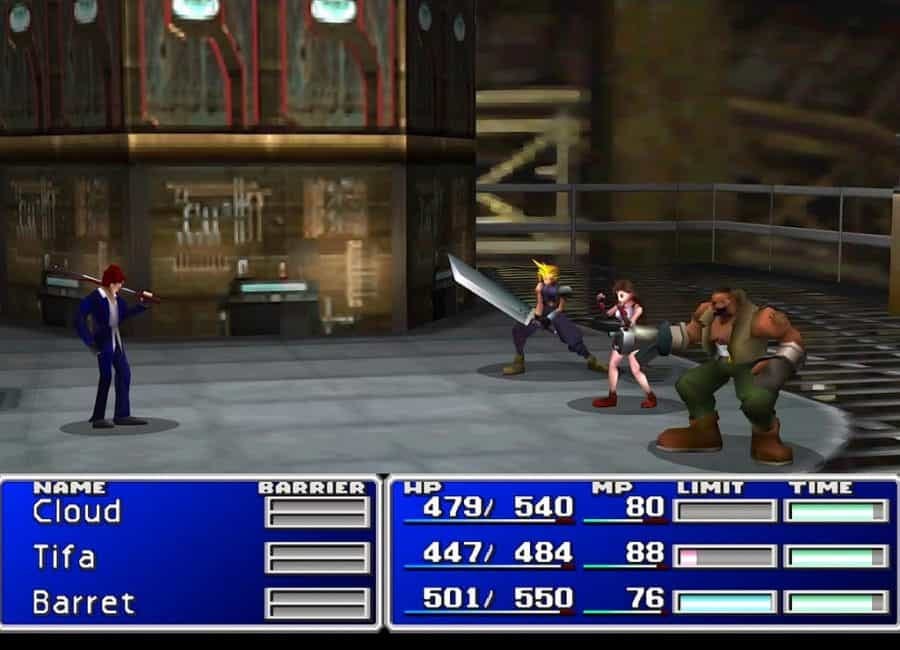
I want to pause here for a moment to draw attention to something. Both Final Fantasy VI and Chrono Trigger were monumental upgrades in what RPGs could be. The graphics were more detailed, the music was phenomenal, and the stories did a lot more with the limited memory of the cartridges than previous games. Why, then, didn’t these two games see the same reaction as FFVII? Why did gamers call for RPGs to “evolve” in the late 90s when they didn’t in the mid 90s? I’m not sure exactly when the term “traditional RPG” began to be used, but in a way, FFVII became both the first and the last “traditional RPG.” Before 1997, people were excited about what RPGs could be; after 1997, people were interested in what RPGs could turn into. Why?
This is a fascinating cultural moment, but it’s also something that has happened before in the history of human civilization. Many important periods in art came about when artists got tired of the expected ways of doing things and started to try something new, even when similar efforts has failed just a few decades (or years) earlier. William Blake and Samuel Taylor Coleridge firmly planted the Romantic movement in British poetry in the early 1800s, but why didn’t William Blake do the same with his poetry a generation earlier? Partially it was because Blake’s poetry is so strange and mythological, and it was hard for people to grasp, but it’s also because the late 1700s was not the right cultural moment for Romanticism to take root in Britain, while 1798 was, apparently, just the right year for Lyrical Ballads to make a big splash.
Or think of Lord of the Rings. People were doing high fantasy way before Tolkien. Tolkien himself had already published The Hobbit. And even when Lord of the Rings was published in 1955/6, it took ten or twenty years to catch on. Now it’s considered the genesis of modern fantasy, even as authors are pushing the boundaries of the genre that Tolkien’s work created.
This moment of turn, however, is fascinating. What makes a community ready to look beyond the boundary lines of a genre and yet still want to be a part of that genre? Gamers didn’t play FFVII, try a few similar games, and then jump ship to first-person shooters (okay, some gamers did). People didn’t play FFVII and then put games down entirely. People played FFVII and then wanted more of the same but also something different from what they had. It’s like a hamburger. SNES gamers wanted to see what different kinds of toppings could go on the burger to make them tastier. PS1 gamers wanted to try chicken instead of beef, or maybe go with pork, or maybe go without a bun, but they certainly didn’t want a normal burger again. In other words, “traditional RPG” became a thing, and many gamers weren’t satisfied with just the same old thing anymore.
Why the need for new?
In a way, the reason many gamers looked for further developments in the RPG genre is because of how different Final Fantasy VII was from previous and contemporary RPGs. While battles were still in lines with one group against another, levels were gained through experience, and there were random battles, just like in SNES games, the increased memory space of the CD allowed for significantly better graphics and a much thicker story with more dialogue. Video games took a flying leap forward with Final Fantasy VII and other similar games in different genres, and so gamers expected similar flying leaps. And if such leaps were taken in graphics and story, why not expect them in battle systems, diversity of storyline choices, and customization.
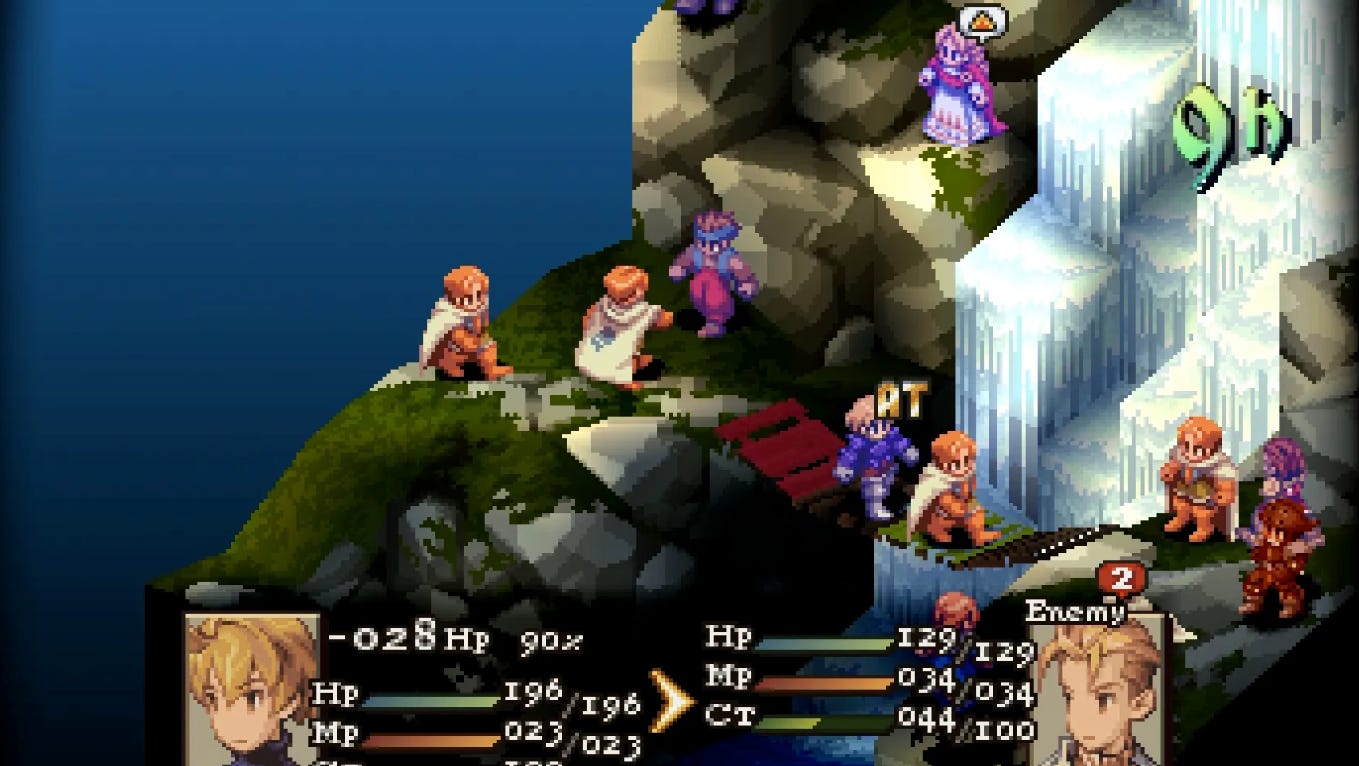
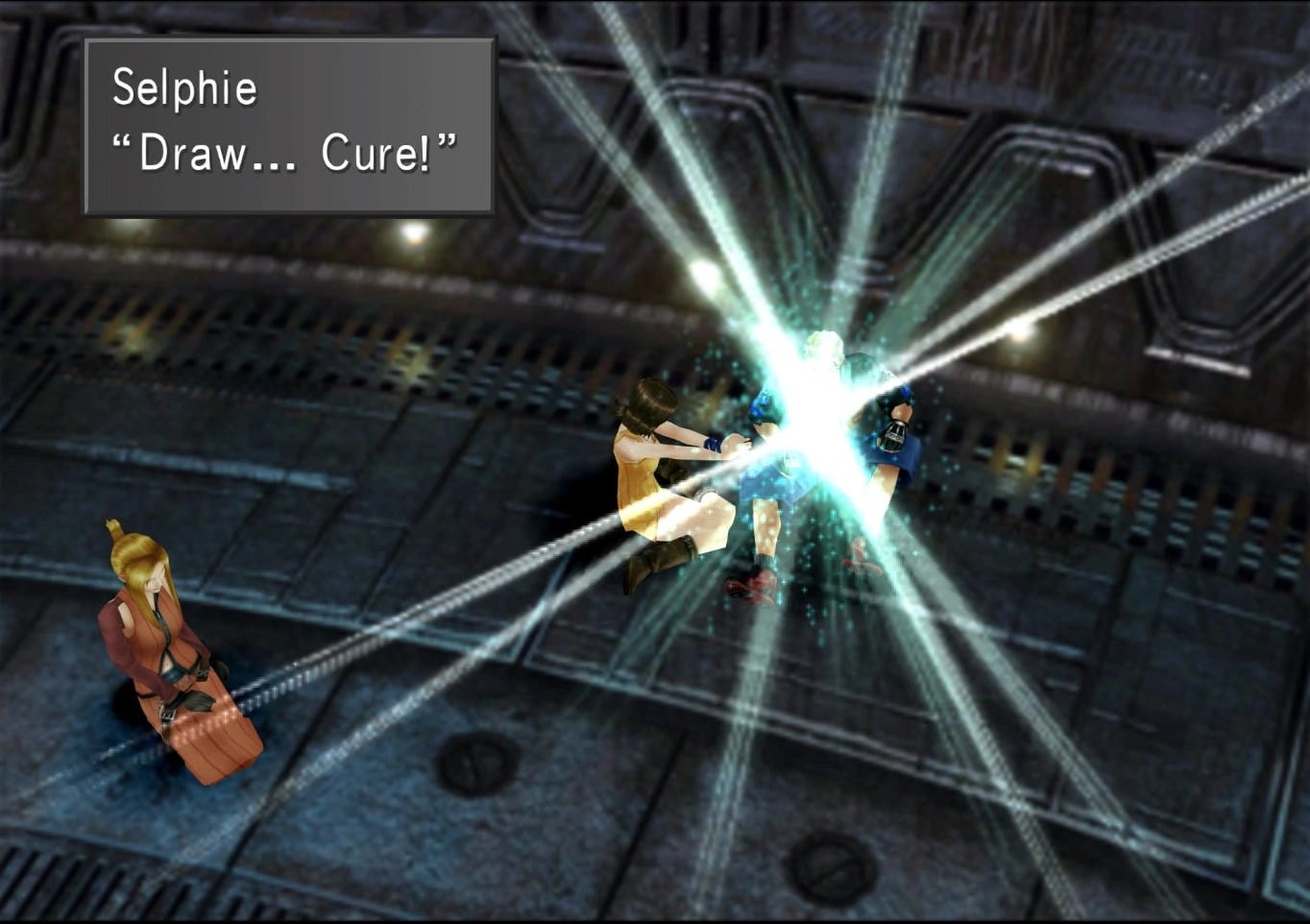
The games that came after 1997, however, cut closer to SNES games than building on FFVII. Final Fantasy Tactics (1997, US 1998) came out a few months after FFVII, and while it had great customization, its storyline was confusing and its graphics more cartoonish. Breath of Fire III (1997, US 1998) had a longer story than its predecessor, but in terms of gameplay it was just like an SNES game (and it had huge loading times). Granstream Saga (1997, US 1998) had an interesting battle system, but its character models had small polygon counts, and it was pretty short. Even Xenogears (JPN/US 1998), which I think made a larger leap in story than FFVII, had splotchy graphics and a famously unfinished second disc. The “killing blow” came with Final Fantasy VIII, which came out in 1999 in both Japan and the US. Anyone who expected another great leap with VIII, or even the same type of game as VII, were surprised at the confused storyline, jagged graphics, and truly weird junctioning system. Now, I love Final Fantasy VIII, but it really is weird. There’s a lot of creativity in the game, and Square was pushing into some fascinating new territory, but for US gamers, it wasn’t different in the way that they were expecting.
Expectations have a lot to do with culture, and what might be successful in Japan doesn’t necessarily succeed in other countries. A game set in a mercenary academy made sense to Japanese gamers in a culture that sees their school life as a secondary (or even primary) home. American teenagers tend to dislike school, so why would we want to play as students? Drawing magic from the environment sounds really cool if one of your religions (in this case, Shinto) sees the natural world as sacred, but the West sees magic as occult and mysterious. Japan in the 90s was still trying to figure out what to do with its continued and in many ways present culture of war from the 1930s and 40s, so the question of memory and forgetting was very much on people’s minds. Not so for people in the West, who soon after the release of Final Fantasy VIII were dealing with terrorism in 9/11. Westerners also had Western RPGs, a sub-genre that has historically done poorly in Japan, which was still looking to Dragon Quest games as the standard for what RPGs are supposed to be like.
The people of any culture want to hear stories that make sense to them. In a way, people expect stories to be one part new and one part their story. Lord of the Rings became a best seller, because it was, in part, a story about the natural world told when nature was becoming more and more important (and later, in the 70s and 80s, when pollution was becoming more of a problem). What is now called “hope-punk” was a major theme in Star Wars, which helped it climb to fame in a time when the hope of the 60s of making society better was beginning to wane. Japanese games weren’t telling stories that Japanese gamers wanted to hear. FFVII made it through with its graphics and its introspective story that questioned who a person is in the deepest part of their selves; FFVIII is about love and discovering one’s true family in one’s schoolmates. They’re drastically different stories.
Western gamers also expected different things from their games, and unfortunately these expectations have led Westerners to look at JRPGs as more simple or juvenile than WRPGs. This is unfair. I’m not sure if this is the case in other parts of the West, but gamers and fans of fantasy and sci-fi have a “darkness” bias in the U.S. Stories that are “dark” or “grim,” that tell the “gritty details,” are seen as more realistic than stories that have more open and hopeful themes. This interest in darker stories was a shift from expectations in the 80s; look at Star Trek. The Next Generation had more hopeful storylines than the darker Deep Space Nine. The Federation in DSN was no longer the pinnacle of what humans could achieve, but was instead a false paradise with many, many problems. Americans (and I think I can say Westerners in general, if the success of Expedition 33 can say anything about our tastes) still now prefer these stories, while the Japanese lean more towards stories about overcoming cultural problems. JRPG stories aren’t simpler, they’re just not the stories that Westerners choose to tell.
WRPGs also place a greater focus on player choices, whereas JRPGs tell a specific story. JRPGs play with the leveling and turn-based battle systems, while WRPGs focus more on skill-buy systems and action-based combat. None of these are better than their opposite, just different. In a way, JRPGs were destined to fall out of favor in the West, though our expectations here in the States and in Europe have made us blind to the creativity Japanese game developers had in varying the Dragon Quest theme - or even building beyond that theme.
What Japan was doing
To take the games noted above as examples, we can see the ways the Japanese were continuing forward even as Western audiences demanded that they evolve. Final Fantasy Tactics is still considered one of the best, if not the best, tactical RPG. The level of customization is astounding, with each job class giving multiple skills in five different categories that can be varied between classes. The story might be confusing, and the translation leaves a lot to be desired, but Matsuno Yasumi (the director and writer) crafted an amazing blend of political drama and spiritual thriller. Breath of Fire III may have been slow in pace, but it saw the develop of the hero from child to adult to dragon in a really beautiful way. Xenogears…ahh, Xenogears. Director Takahashi Tetsuya tried to make something more than a game. Planned to be six episodes long, Xenogears was to be the fifth episode, though it was the only one produced. Takahashi’s vision was hampered by time (he had to train his staff, many of them newbies, on how to make games) and the limitations of disc space and company buy-in. He tried again with the Xenosaga trilogy, then again with Xenoblade, only narrating his ideas once he go the right people and the space to do it (and, to be fair, once he got better at making actual games, not movies). Final Fantasy Tactics and Takahashi’s Xeno games are extremely complex and very mature in style and story.
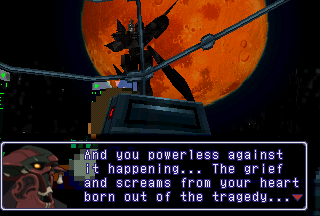
There was also Parasite Eve (1998), which tried to blend survival horror and RPGs. The game has a moody atmosphere that develops from its creepy music, body horror, and its plot, which blends sci-fi and fantasy. Jade Cocoon (1998) had a similar atmosphere but blended RPG with monster-catching. The game is short and a little simple, but mixing monsters used the PS1’s ability to hold various monster types in memory to create some horrifying, hilarious, and fascinating creatures. Final Fantasy VIII’s junction system is confusing at first, but it’s versatile and the most experimental since Final Fantasy II’s system of growing abilities by using them. Chrono Cross (1999) might not be the sequel to Chrono Trigger that anyone, Westerner or Japanese, was looking for, but the element system allowed for a great deal of customization - maybe even too much; resetting characters could become a chore.
Jumping forward, Paper Mario (2000) and Dark Cloud (2000) added a lot to the RPG formula, and Final Fantasy X’s (2001) sphere grid is a customization dream. Wild Arms 3 and Suikoden III (both 2002) did not push the genre as much, but they further perfected their respective series. And Xenosaga (2002) had as many dreams as Xenogears, and, yes, multiple series of 2-hour cut-scenes are a bit excessive, but wow, what amazing stories were told!
I could easily go on. Now, JRPGs weren’t always pushing the boundaries of what RPGs could do, but not all WRPGs did much new either. And while Japanese games on PS3 took a hit because of the insistence of Japanese game companies (especially Square Enix) to develop their own graphics engines, there were still some really creative games: Lost Odyssey (2007), Valkyria Chronicles (2008), and Persona 4 (2008). Again, creativity kept on happening; it’s just that Western audiences were looking for something different.
Love it all
If I could make you walk away from this article with one thing, it would be a greater appreciation for games of all types. Western RPG fans often look down on JRPGs, and while I don’t expect everyone to love what Japanese developers are doing, I do hope that they can see the depths of creativity and curiosity in games that don’t line up with our cultural expectations. One of the awesome things happening in gaming right now is that, in game systems at least, anything goes. We’re so open to different ways of doing things. Let’s see what Japanese game developers are doing and appreciate them on their own terms.
I've always seen the key difference between JRPGs and western RPGs as being that in JRPGs, the player follows a story, and in western RPGs, the story follows the player.